

New to code? Start where every model starts.
AI Engineer Fundamentals: a machine learning course for beginners. Python, SQL and your first working model in 8 weeks, live.
For anyone starting from zero: a live maths and Python bootcamp, AI assistants, SQL, Python and Git, then the No-Show Model on your GitHub, with placement support and a certificate an employer can verify.
Taught live by industry experts from Mastercard and Paytm.
★ 4.7 from our pilot batch · 4,200+ learners trained by SkilD · learners at 39+ companies
Free · 90 minutes, live with our faculty · next date announced soon
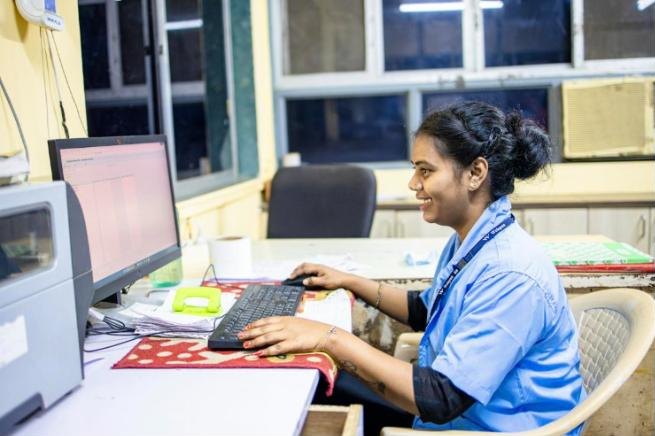
Thirty people on the same weeks, with one chat for questions and a mentor who knows your name.
The No-Show Model, and three smaller builds on the way to it.
Resume, portfolio review, mock interview, job alerts and introductions.
Named after your project, so an employer sees the work.
Machine learning and AI engineer salary in India: up to ₹80 LPA.
Every company racing to ship AI needs people who can make a model work in production, and it pays well for the people who can.
- ₹10 LPAAverage, first 2 years
- ₹22 LPAAverage, 2–5 years
- ₹38 LPAAverage, 5–8 years
- ₹52 LPAAverage, 8+ years
- ₹80 LPATop 10%, 8+ years
recrew.ai India AI/ML Engineer salary guide, 2026 (averages by experience; ₹80 LPA is the top 10% at 8+ years) · recrew.ai India LLM Engineer guide, 2026 · MLOps: recrew.ai and TeamLease Digital GCC data, 2025.
Who AI Engineer Fundamentals is for.
People starting from zero who want a first data or AI role, and a working model to show for it in eight weeks.
A fresher or student→ A first data or AI role
Start from a blank screen. You finish with Python, SQL and a model an interviewer can open and run.
An analyst on Excel→ Python and models
You already read numbers for a living. Here the numbers train a model, and the model makes the call a day early.
Back after a break→ A fresh start in AI
You restart with the skills AI teams are hiring for now, alongside people at every stage.
Anyone switching in→ A tested first step
Eight weeks to find out if AI engineering is your road, with a working model in hand either way.
- No coding experience needed
- School maths; the bootcamp refreshes the rest
- Your weekend mornings for eight weeks, live, after four short weekday bootcamp sessions
- A laptop with 8 GB memory; every tool is free
- English you can follow in a live class
PG Program · AI Engineer: 34 weeks to the AI Engineer role.
The full program adds machine learning, deep learning, LLMs and agentic AI, an AI product shipped end to end and presented live to a hiring panel, and placement support through to offer. Finish this course first and you start it with Python, SQL and a first model already in hand.
Sixteen tools, free to start, the same ones data and AI teams use every day.
Installed with the helpline before the bootcamp, so the first live session starts on time.
- Any laptop from the last five years, with 8 GB memory
- Python, PostgreSQL and Jupyter, installed with the helpline
- A free GitHub account, where your model lives
- Everything runs on a laptop: no GPU, cloud account or card needed
Stuck on setup? WhatsApp the helpline and someone walks you through it. Every tool stays on your laptop after the course.
Learn it. Clean it. Train it. Beat the baseline.
The full AI Engineer Fundamentals syllabus: a live bootcamp, then eight weeks in five parts, and one new skill at the end of each.
Maths and Python bootcampbefore week 1 · 8 hrsYou leave able toRead the maths a model is built on, and write your first Python.
- BLive maths and Python bootcampFour weekday sessions of two hours, live: linear algebra (vectors and matrices) · calculus (derivatives and the chain rule) · probability · object-oriented Python (classes)8 hrs
AI Launchpadweeks 1–2 · 16 hrsYou leave able toUse the main AI assistants safely, and know how they learn.
- W1LLM foundations and the major AI assistantsLarge language model fundamentals: tokens, context windows and hallucination · ChatGPT, Claude, Gemini and Copilot compared · prompt engineering: role, context, few-shot examples and output format · output verification, and AI data security: confidential data, PII and acceptable-use policy · AI concept hour: machine learning fundamentals and supervised learning8 hrs
- W2AI-assisted research, spreadsheet analysis and a first workflowResearch with citations in NotebookLM and Perplexity · AI in spreadsheets: formula generation and data analysis · image and video generation (demonstration) · an AI workflow, built live · AI concept hour: how LLMs are trained (pre-training, fine-tuning, RLHF) and why they hallucinateBuild: a working AI workflow with a verification log8 hrs
SQLweeks 3–4 · 12 hrsYou leave able toWrite the SQL that data and AI jobs and interviews ask for.
- W3SQL queryingSELECT, filtering and joins · aggregation with GROUP BY · subqueries and common table expressions (CTEs)6 hrs
- W4Analytical SQLWindow functions · indexing and query execution plans · a training table built on the SkilD lab PostgreSQLBuild: a timed SQL set, and the No-Show training table6 hrs
Pythonweeks 5–6 · 12 hrsYou leave able toWrite clean, tested Python that loads, cleans and reshapes data.
- W5Python fundamentalsData types, functions, file I/O and exception handling · unit testing with pytest · REST APIs and JSON6 hrs
- W6Data manipulation with pandas and NumPypandas · NumPy · data cleaning and transformationBuild: a tested data-cleaning script6 hrs
Linux, Git and your first modelweeks 7–8 · 12 hrsYou leave able toWork like an engineering team, and ship a first model that beats a baseline.
- W7Linux, Git and AI-assisted codingLinux shell: bash, file permissions and cron scheduling · Git branching, pull requests and the GitHub workflow · AI-assisted coding in a version-controlled repository, with review controlsBuild: a repository with a clean history6 hrs
- W8Project weekend · the No-Show ModelCapstone model build from a template, mentor-led · project review and assessment · catch-up session for missed classesBuild: the No-Show Model, a first model that beats a baseline6 hrs
The No-Show Model · AI Engineer Fundamentals
A model that beats the baseline on bookings it has never seen, and resume lines to explain in any interview.
The detailed AI Engineer Fundamentals syllabus and the timetable, in one PDF.
- Every topic, week by week
- The bootcamp and the timetable, with dates
- All the tools, and the setup guide
- The No-Show Model brief
Download it now. The helpline is on WhatsApp if a question comes up.
Your syllabus is ready.
Questions? The helpline answers on WhatsApp.
Taught live by industry experts who ship models and data systems.
They answer in the cohort chat between sessions, and review the work you hand in.



An 8-week plan, mapped with a program advisor.
Get your 8-week plan: a program advisor calls within one working day and maps your route to a first data or AI role. Or WhatsApp the helpline now.
Your plan is on its way.
A program advisor calls within one working day to map the route to a first data or AI role.
Three things that get you from zero to a first model.
Hands-on, from week one
Every week ends in something built on your own laptop, reviewed by the faculty.
The tools AI teams use
Python, SQL, pandas, scikit-learn, Git and eleven more, free to start.
Built around a full-time job
Weekend mornings, and every class recorded and up within 24 hours.
What a week looks like, from the bootcamp to the model.
Everyone moves through the same week on the same deadline. Weeks 1 and 2 add an AI concept hour, and the project weekend doubles as a catch-up clinic.
- 01The brief, firstWhat you’ll build this week, and what done looks like. Before the session, not after.
- 02Build it with the facultyOn screen with the faculty, chat open, your question answered on the call.
- 03Finish itStarted in the session, finished by the deadline, pushed to your GitHub.
- 04Reviewed, every weekYour work checked by the expert who set it, so you know where you stand.
- 05Bring what brokeAsk in the cohort chat, or bring it to the next session.
- 06It carries forwardEvery week hands its work to the next. The training table from week 4 feeds the model in week 8.
A machine learning project for your resume: the No-Show Model, a first model that beats the baseline.
It lives on your GitHub, and it is finished when it beats a simple baseline on bookings held back from training. An interviewer can open it and run it.
The No-Show Model: which clinic bookings will be missed, predicted a day ahead.
A chain of neighbourhood clinics loses a doctor’s slot every time a patient misses a booking. You get its records: patients, appointments, reminders sent, the day and the hour. You build the training table in SQL, clean it in Python, and in the project weekend train a first model from a template with mentors beside you, so the front desk can call ahead or fill the slot.
- The data
- Six months of a clinic chain’s bookings, supplied with the brief: synthetic, shaped on how clinic bookings behave, messy on purpose.
- Done when
- The model beats the “everyone turns up” baseline on held-out bookings, and the write-up says in plain words what it gets right and wrong.
- What it proves
- That you can take raw tables to a model-ready dataset and show a first model earns its place against a baseline.
- What it does
- Ranks each of tomorrow’s bookings by its risk of a no-show.
- Tech stack
- Pythonpandasscikit-learnSQLPostgreSQLGit
- Key challenge
- Data leakage: only what is known the day before goes into the model.

Three builds on the way
Each one becomes a piece of the No-Show Model.
The Training Table
Bookings, patients and reminders joined in SQL into one row per booking, after a timed SQL set on a business schema.
Done when: the row counts reconcile after every join.
Proves the ability to build the table a model learns from.
The Cleaned Bookings
The raw bookings cleaned in pandas, with pytest checks on every rule, ready for a model.
Done when: the tests pass and nothing known only after the day leaks in.
Proves the ability to prepare data a model can trust.
The Model Repository
The project in Git, built on branches and pull requests, with an AI coding assistant kept in check and a README a stranger can follow.
Done when: a stranger can clone it and run it.
Proves the habits of an engineering team.
The faculty who teach it review every project.
Placement support: five steps from the course to your first data or AI role.
The No-Show Model is the raw material. These five steps put your project in front of hiring teams.
- 1Week 8Your resume and LinkedInRewritten around the No-Show Model and reviewed line by line.
- 2Week 8Your portfolio reviewYour GitHub checked against what an interviewer opens first.
- 3After week 8A mock interviewA Python, SQL and first-model round with an industry expert, recorded and reviewed.
- 4From week 8Job alertsEntry-level data and AI openings on WhatsApp, as they open.
- 5From week 8IntroductionsTo hiring teams in the SkilD network, as roles open.
Check your resume against these roles first → · Going for the AI Engineer role? See the PG program →
Our learners work at 39+ companies.
Where people who learned with SkilD work now.


 amazon
 Swiggy
 Twitter
 ByteDance
 PayPal


 Flipkart


 ATLASSIAN
Training a team? 12+ organizations bring us in to train their own people, on their own work. Plan a program for your team →
Every AI product in the country is only as good as the data and the model under it.
Demos get the headlines. Measured models get the job.
A demo takes an afternoon. Companies hire for the harder part: a model trained on clean data, tested against a baseline, and still right next quarter. The companies racing to ship AI are hiring the people who can do that, and this course is where you start on it.
From a first line of Python to a first model.

I used to send my data to the analytics team and wait. In the project weekend I trained my first model on it, and it beat the baseline.

Maths was a blur at college. The bootcamp went through it on examples, and for the first time it made sense.

I wanted to know if AI engineering was for me before committing to 34 weeks. The No-Show Model answered that, and I joined the PG program.
One machine learning certificate an employer can verify by its ID.
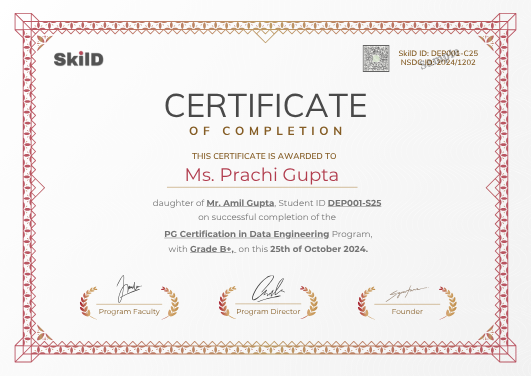
Awarded when your project is complete and every build passes its review, with a verification ID anyone can check.
Awarded by SkilD on completion, and checked at skild.co.in/verify. It names the No-Show Model, so an employer sees the work itself, with the ID to prove it.
One fee for the machine learning course, everything included.
About ₹167 a live hour.
- The bootcamp and all eight weeks, taught live
- The No-Show Model and three builds on the way
- Placement support
- Every session recorded
- The weekday doubt channel and the Saturday doubt clinic
- The certificate
Training a whole team? Plan it with us →
Why a bootcamp and eight weeks, live?
Plenty of ways to start on machine learning. Here is what each one usually gets you.
| The route | What it usually gets you | What 8 weeks here gets you |
|---|---|---|
| YouTube and free courses | Everything, in the wrong order, and nobody to ask when the model fails to learn. | A fixed order, from the maths to the first model, and the faculty answering in the session. |
| A recorded course | Videos you mean to finish. | A live session every weekend, a deadline that keeps you moving, and placement support after. |
| A three-day bootcamp | A certificate and a blur. | A bootcamp, then eight weekends, each one built on the last, so it sticks. |
From enrolment to the first bootcamp session.
- 1EnrolTwo short steps on this page
- 2Pay onceYour seat is held for this cohort
- 3Join the cohort groupOn WhatsApp, with your batch
- 4Setup callWith the helpline, before the bootcamp
- 5The bootcampLive online, with your faculty
From 10 AM IST, straight after the bootcamp week.
Seat confirmed. Welcome to the November cohort.10:02
- ✓Python
- ✓PostgreSQL
- ✓Jupyter
- ✓Git
The joining link for the bootcamp is pinned above.Fri 6:00 PM
- One price, everything includedevery live session and its replay, every project review, and placement support.
- Live means livea room of thirty, every question answered in the session.
- Dates that holdplan your months around us.
- A mentor who knows your namefirst reply within one working day.
- Miss a weekwatch the recording, then bring your questions to the Saturday doubt clinic.
- Everything you build is yourscode, projects, portfolio. For good.
Enrol in AI Engineer Fundamentals.
Two short steps, then payment. About three minutes.
Details saved.
One more short step, then payment.
You are enrolled.
Your confirmation and the cohort WhatsApp link arrive within minutes. The helpline sets you up before day one.
Machine learning course for beginners: your questions, answered.
Do I need to know how to code for this machine learning course for beginners?
The course starts from zero, with a live maths and Python bootcamp before week 1. The helpline sets up the laptop before the first session.
Do I need maths for this machine learning course?
School maths is enough to start. The bootcamp covers what a first model needs: vectors and matrices, derivatives and the chain rule, and probability, taught live on examples.
What will I be able to do at the end of AI Engineer Fundamentals?
Use AI assistants well, query a database in SQL, write clean and tested Python, work in Git like an engineering team, and train a first model that beats a baseline on held-out data. The No-Show Model on your GitHub shows it working.
Is this machine learning course enough to get a job?
It prepares you for entry roles like Data Analyst, Junior Data Scientist, Business Analyst and Machine Learning Intern, with placement support to reach them. For the AI Engineer role itself, the PG program goes further: deep learning, LLMs, agents and an AI product shipped end to end.
What is the difference between AI and machine learning?
Machine learning is the part of AI where a model learns a pattern from data, like which bookings get missed, instead of following rules someone wrote. Chat assistants are built on it too. This course builds your first model.
Who can enrol in AI Engineer Fundamentals?
Anyone who can follow a live class in English: students, freshers, working professionals and people coming back after a break. Every stream and every degree is welcome.
Can I learn machine learning from a non-tech background, like B.Com or BA?
Yes. The bootcamp and the first weeks start from zero, so a commerce, arts or science graduate begins in the same place as an engineer.
What laptop do I need for the machine learning course?
Any laptop from the last five years with 8 GB memory, on Windows, Mac or Linux. A first model trains in seconds on any laptop.
When does the machine learning bootcamp run?
Four live weekday sessions of two hours, in the week before week 1.
What are the machine learning course fees?
₹9,999 including GST, once. It covers the bootcamp and all eight weeks taught live, the No-Show Model and three builds, placement support and the certificate.
What if I miss a session of the machine learning course?
Every class is recorded and up within 24 hours. Watch it, then bring your questions to the Saturday doubt clinic.
Do I get a machine learning certificate?
Yes, with a verification ID an employer can check. It is awarded when your model runs and every build passes its review.
Is there placement support after the machine learning course?
Yes, in five steps: your resume and LinkedIn, a portfolio review, a mock interview, job alerts and introductions to hiring teams in the SkilD network, as roles open.
Does AI Engineer Fundamentals lead into the PG program?
Yes. You start the AI Engineer PG program with Python, SQL and a first model already in hand.
Eight weeks from now, your first model could be on GitHub, beating its baseline.
Python, SQL, a model an interviewer can run, and placement support to put it in front of hiring teams, for ₹9,999.
Want to look first? Download the syllabus or get a call back.
Data and AI openings on WhatsApp, and the hiring market twice a month.
The roles the companies our learners work at are hiring for. Read three issues of the Brief and you’ll know whether we’re your kind of school.
You’re on the list.
The first alert lands the next time our network is hiring, and the next Brief lands in your email.